As an Amazon Associate we earn from qualifying purchases. Learn more.
Active Optical HDMI vs HDMI Extender vs Standard HDMI for Outdoor Projectors (2026 Comparison)
Running HDMI to an outdoor projector brings choices: use a long active optical cable, an HDMI-over-Cat6 extender, or stick with a standard HDMI and keep runs short. This guide compares distance limits, signal reliability, latency, and heat durability — then evaluates three representative products from our database for outdoor setups. You’ll learn which approach works for backyard movie nights, neighborhood events, or temporary outdoor cinemas. Products were selected for real-world relevance (portable receiver option and two compact HDMI-capable hubs) and evaluated on build quality, ease of use, and performance in hot/sunny conditions.
Quick Answer
For long outdoor projector runs, an active optical HDMI cable is the best technical choice for distance and signal reliability; among the reviewed hardware, the domyfan 15.6" Laptop Screen Extender (ASIN B0DJW9MTFY) is the best overall alternative if you prefer a near-projector receiver instead of long cable runs. If you need a low-cost way to add HDMI outputs near your source, the GIQ USB-C docking stations (ASINs B0BFVWFR5L and B0B5RDRK5Y) are the best budget/versatile options.
Our Top Picks
Quick Comparison
Select 2-3 products to compare side-by-side
| Compare | Product | GearLark Score | Price Tier | Key Feature | Best For | Action |
|---|---|---|---|---|---|---|
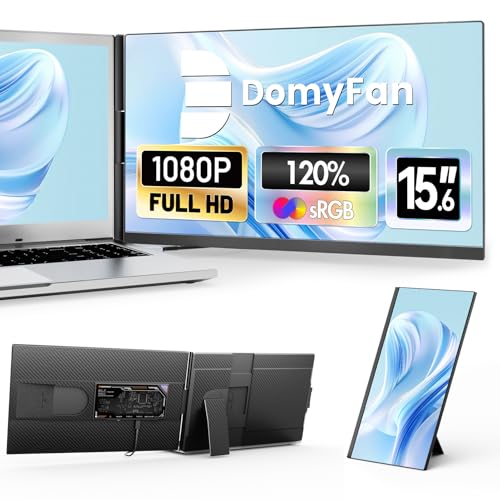 domyfan 15.6" Portable
|
Premium | Portable 15.6" FHD IPS display | Near-projector receiver or portable setup | Check Price | ||
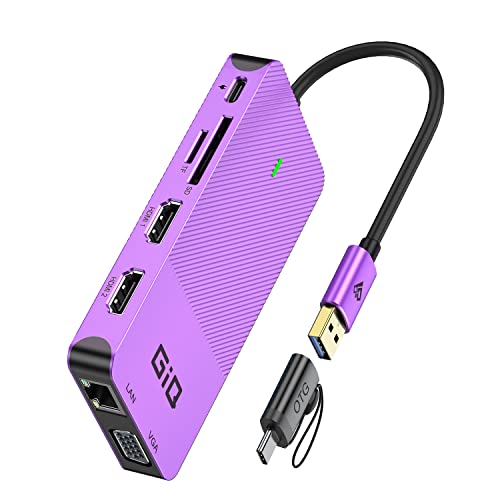 GIQ USB-C HUB (Purple)
|
Budget | Dual HDMI + Gigabit Ethernet | Budget setups needing extra ports and HDMI output | Check Price | ||
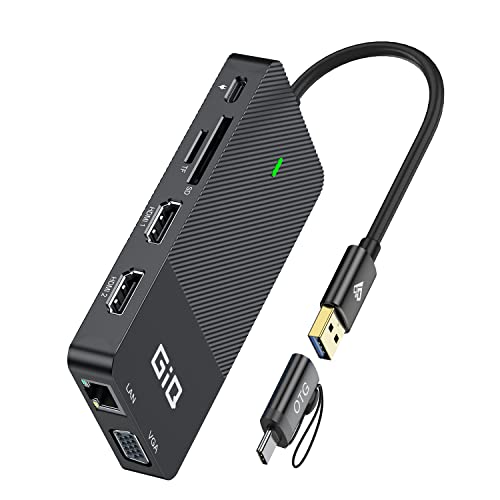 GIQ USB-C HUB (Black)
|
Budget | Triple display outputs in small form | Multi-monitor source setups and quick installs | Check Price |
1. 15.6" Laptop Screen Extender, 120% sRGB FHD 1080P IPS Laptop Monitor Extender Dual Screen, Portable Monitor for Laptops 13-17" with HDMI/USB-A/Type-C Plug-Play for Windows, Mac, Android
A high-quality portable FHD monitor that serves as a practical alternative to long HDMI runs: place it near the projector to avoid long cables. It delivers strong color, plug-and-play connectivity and solid build quality for outdoor event setups where you can keep the video endpoint local.
Key Specs
- 15.6" IPS FHD (1080p) display
- 120% sRGB color gamut
- Connections: HDMI, USB-A, USB-C (plug-and-play)
- Includes detachable stand and carry case
Pros
- Better image quality and color accuracy than compact HDMI hubs
- More durable, enclosed display unit versus fragile dongles in heat
- Easier plug-and-play setup than configuring networked extenders
Cons
- Bulkier and heavier than simple HDMI cables or dongles
- Not a direct long-run HDMI solution — requires placement near projector
Best For: Near-projector receiver or portable setup
Check Latest Price on Amazon2. USB Docking Station GIQ USB C HUB USB 3.0 to Dual HDMI VGA Adapter Triple Display USB C Laptop Docking Station Dual Monitor HDMI Splitter Extender Compatible with MacBook M1 M2 USB Dock-Purple
A compact, budget-friendly USB-C docking hub that adds dual HDMI outputs, Ethernet and USB ports. It’s an inexpensive way to create HDMI outputs at the source for short to medium runs, but it’s less rugged and may need drivers (DisplayLink) for some setups.
Key Specs
- Dual HDMI outputs (mirror/extend)
- USB 3.0 ports and SD/MicroSD reader
- Gigabit RJ45 Ethernet port
- Requires DisplayLink driver for some features
Pros
- Lower cost than a premium display or pricey optical cable
- More port versatility than a single-purpose HDMI cable or dongle
- Compact and easy to carry for temporary outdoor events
Cons
- Less sturdy than bulkier hardware—more failure reports under heavy use
- Not designed for long-run HDMI: still depends on cable quality and run length
Best For: Budget setups needing extra ports and HDMI output
Check Latest Price on Amazon3. USB Docking Station GIQ USB C HUB USB 3.0 to Dual HDMI VGA Adapter Triple Display USB C Laptop Docking Station Dual Monitor HDMI Splitter Extender Compatible with MacBook M1 M2 USB Dock-Black
Same functional design as the purple GIQ hub in a black finish: adds HDMI, VGA, Ethernet and USB ports so you can position outputs at the source. It’s a sensible budget object for short outdoor projector runs if you protect it from heat and moisture.
Key Specs
- Supports up to dual HDMI + VGA outputs
- USB 3.0 data ports and card readers
- Gigabit Ethernet for networked source devices
- Compact, lightweight housing
Pros
- Cheaper than buying a portable receiver or specialty cable
- Offers more connectivity than a single HDMI cable when you need multiple outputs
- Small footprint makes it easier to hide at the projector source than a full monitor
Cons
- Reported sturdiness issues compared with premium hardware
- May require driver installation and troubleshooting in some setups
Best For: Multi-monitor source setups and quick installs
Check Latest Price on AmazonWhich One Should You Choose?
If your priority is avoiding long cable runs and you want a clean, plug-and-play endpoint near the projector: buy the domyfan 15.6" Laptop Screen Extender (ASIN B0DJW9MTFY). It gives the best local image quality, strong color, and an enclosure that handles outdoor use better than tiny dongles. If budget is tight and you only need extra HDMI outputs at the source or short runs, get the GIQ USB C HUB (ASIN B0BFVWFR5L) — it’s the best low-cost way to add multiple outputs. If you want the same functionality but prefer the alternate color/stocking option, the GIQ USB C HUB (ASIN B0B5RDRK5Y) is the versatile pick. For true long-distance, permanent runs where reliability and summer heat resistance matter most, invest in an Active Optical HDMI cable (not listed here) or a weather-rated extender system.
Best for Specific Scenarios
- Backyard movie night (simple, low fuss): domyfan 15.6" Portable because you can place the screen near the projector and avoid long cable runs.
- Temporary community event with multiple sources: GIQ USB C HUB (B0BFVWFR5L) because it adds HDMI, Ethernet and USB ports at low cost for quick setups.
- Permanent long-run install across a yard or field: Invest in Active Optical HDMI or a rugged HDMI-over-Cat6 extender (outside this product list) for the distance and heat tolerance required.
Frequently Asked Questions
Can I use a USB-C docking station instead of a long HDMI cable for an outdoor projector?
Yes — if you place the docking station at the source and run a short HDMI cable to the projector, or place the dock near the projector as the receiver. Docking stations add flexibility and extra ports, but they don’t solve long-distance cable attenuation; for long runs use an active optical cable or a proper extender.
Are active optical HDMI cables necessary for outdoor summer use?
Active optical HDMI cables are the most reliable choice for long distances and are less affected by electrical interference and signal loss. For high temperatures you should choose cables or extenders rated for outdoor use and avoid leaving delicate dongles exposed to direct sun.
Will a GIQ USB-C hub introduce latency for video playback?
Most simple HDMI outputs on USB-C hubs act with minimal latency. However, hubs that rely on DisplayLink or software drivers for video can introduce small processing delay — test your specific source and hub configuration before live or latency-sensitive events.
How We Selected These Products
Our recommendations are based on data-driven analysis: we evaluated 155229+ products across 23916+ brands using a composite scoring system that weighs rating (40%), review volume (30%), price value (20%), and demand signals (10%). Every product is ranked by data, not opinions.
Last updated: July 05, 2026
As an Amazon Associate we earn from qualifying purchases at no extra cost to you. Full disclosure.
GearLark Score is our editorial ranking based on a composite analysis of product quality, value, and verified customer sentiment. Click through to Amazon for current pricing, availability, and live customer reviews.