As an Amazon Associate we earn from qualifying purchases. Learn more.
Best Portable Power Stations for Family Emergencies (2026)
Storm season means families need dependable backup power for phones, medical devices and a few small appliances. In this roundup we review three mid-range portable power stations that prioritize reliability, sensible capacity and easy use. You’ll learn which models best suit short outages, medical-device support and car-camping, and what to watch for in battery size, AC wattage and durability. Products were selected from popular portable power banks with AC outlets, emphasizing real customer feedback on build quality, battery life, safety features and value.
Quick Answer
For a reliable mid-range option that balances portability, AC output and useful emergency features, the Apowking 146Wh Portable Power Station is our top pick. It’s compact and versatile for charging phones, laptops and small appliances during storms, while the Krisdonia 60000mAh (222Wh) model is the better choice if you need more runtime or higher AC wattage.
Our Top Picks
Quick Comparison
Select 2-3 products to compare side-by-side
| Compare | Product | GearLark Score | Price Tier | Key Feature | Best For | Action |
|---|---|---|---|---|---|---|
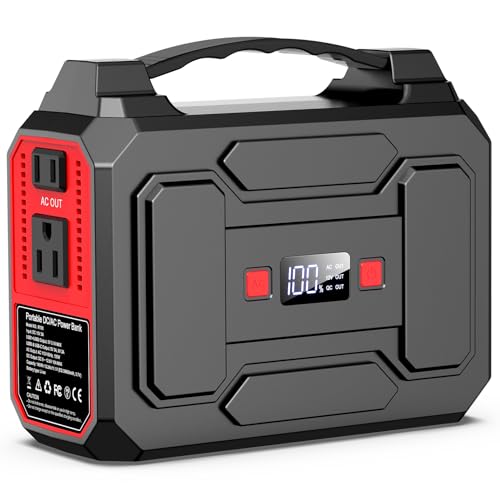 Apowking 146Wh Power Station
|
Mid-Range | 100W AC output with solar input | Light-family backup & portable charging | Check Price | ||
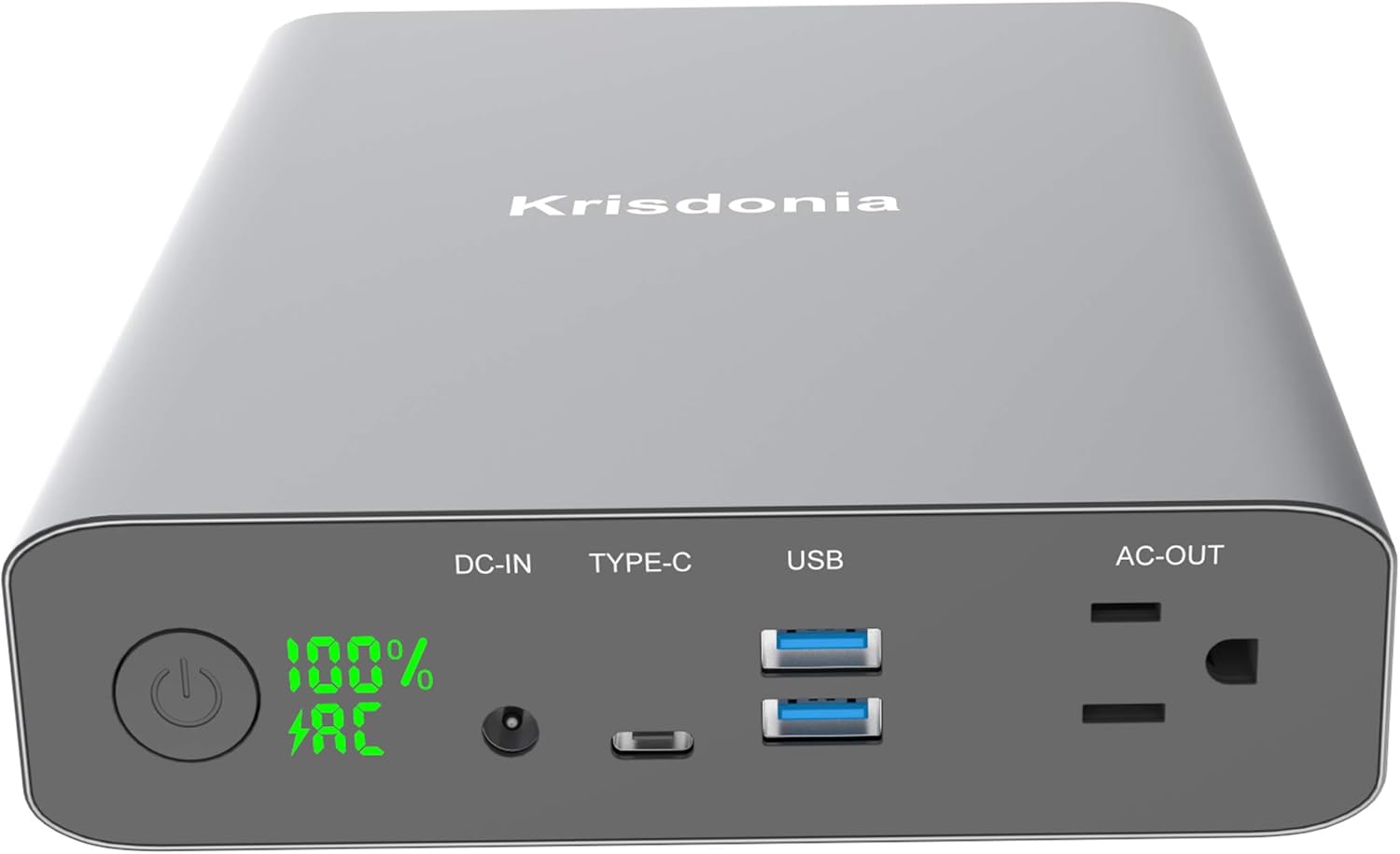 Krisdonia 60000mAh (222Wh)
|
Premium | Higher capacity (222Wh) and pass-through | Longer runtimes and modest AC loads | Check Price | ||
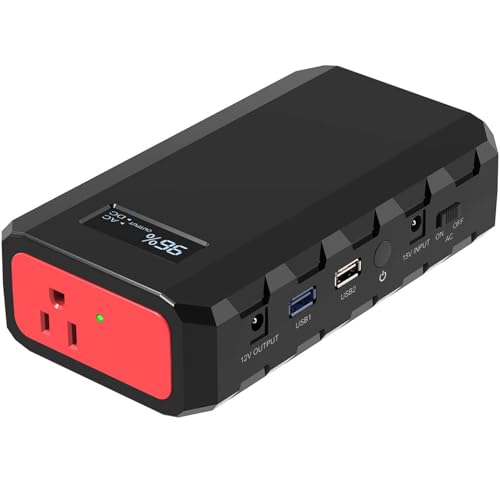 SinKeu 88.8Wh Power Bank
|
Budget | Fast recharge and OLED display | Short outages, travel and car use | Check Price |
1. Apowking 146Wh Portable Power Station Bank 200W Peak(100W Rated) Solar Powered Power Bank with AC Outlet 110V, 39600mAh, USB QC3.0 Fasting Charging, LED Flashlights for Home Camping Emergency
Compact and lightweight, the Apowking 146Wh unit is built for quick deployment during storms and trips. Customers praise its portability, multiple outputs and safety BMS, though some report mixed long-term durability and charge-hold consistency.
Key Specs
- Capacity: 146Wh / 39600mAh
- AC output: 110V, 100W rated (200W peak)
- Ports: 2x AC, USB-A, QC3.0, USB-C, DC 12V
- Recharge: AC, car charging, 13–23V solar input
- Weight: ~3.3 lb; dual LED flashlight and digital display
Pros
- Very portable and easy to carry
- Multiple output ports including AC and quick-charge USB
- Built-in BMS, LED flashlight and clear battery display
Cons
- Some users report inconsistent charge retention over time
- 100W AC limit can’t run larger appliances
Best For: Light-family backup & portable charging
Check Latest Price on Amazon2. Krisdonia Portable Power Station 130W AC Power Bank 60000mAh Lithuim Polymer Battery Backup Power Supply for Outdoors Camping Travel Hunting Emergency
The Krisdonia delivers more capacity and a slightly higher AC limit (130W) for extended outages or running small medical devices. It’s feature-rich with pass-through charging and multiple fast-charge ports, though it’s a bit heavier and some buyers have mixed views on long-term durability.
Key Specs
- Capacity: 60000mAh / 222Wh
- AC output: 110V, up to 130W
- Ports: AC outlet, 2x QC3.0 USB-A, 1x 20W USB-C
- Recharge: DC input (19V/2A); recharge in ~8 hours
- Weight & size: ~3.9 lb; lithium polymer cells with multi-protection
Pros
- Higher capacity for longer runtimes
- Pass-through charging lets you charge devices while recharging the unit
- Good mix of USB-A and USB-C fast-charge ports
Cons
- Heavier than smaller mid-range options
- AC output still limited for many household appliances
Best For: Longer runtimes and modest AC loads
Check Latest Price on Amazon3. SinKeu Portable Power Bank with AC Outlet, 88.8Wh Portable Laptop Charger, Portable Power Station Outdoor Generators Portable for Home Backup Outdoor Emergency
A budget-friendly, compact power bank with an AC outlet and quick recharge via DC15V. Customers like its travel-ready size and safety BMS, but capacity is lower and reliability reports are mixed across users.
Key Specs
- Capacity: 88.8Wh / 24000mAh
- AC output: 110V single AC outlet
- Ports: QC3.0 USB, 110V AC, DC 9–12.6V output
- Recharge: DC15V/2A (~4 hours) and car charger included
- Extras: OLED status display and built-in BMS
Pros
- Very portable and quick to recharge
- Clear OLED display and solid safety protections
- Includes car charging accessories for road use
Cons
- Lower capacity limits runtime for multiple devices
- Some users report mixed durability and compatibility with laptops
Best For: Short outages, travel and car use
Check Latest Price on AmazonWhich One Should You Choose?
If you want the best balance of portability and useful AC output for everyday family emergencies → Apowking 146Wh (B097M7NLVN). If you need longer runtime or to support small medical devices with a bit more headroom → Krisdonia 60000mAh / 222Wh (B07LBLQ9YY). If budget and travel-friendly recharge options are most important → SinKeu 88.8Wh (B0CQ2J6Q1W).
Best for Specific Scenarios
- Nighttime phone and tablet charging: Apowking because it’s lightweight and has multiple USB outputs for family devices.
- Running a small medical device or longer outages: Krisdonia because its higher 222Wh capacity and 130W AC output provide more runtime and headroom.
- Road trips or quick car emergencies: SinKeu because it recharges fast from a car and is compact to stow in a vehicle.
Frequently Asked Questions
Can these power stations run a CPAP or other medical device?
It depends on the device’s continuous wattage. Many CPAPs draw 30–60W and will run on mid-range stations for several hours, but always check the device’s power requirement and the station’s continuous AC wattage. For longer use or higher-draw devices, choose a higher-capacity unit (e.g., Krisdonia) and verify compatibility with the manufacturer of your medical equipment.
How long does it take to recharge these power stations?
Recharge times vary by model and method. Smaller units with dedicated DC inputs can top up in around 3–8 hours on wall power; SinKeu advertises ~4 hours via DC, while Krisdonia typically takes longer on DC input. Using higher-power USB-C or wall adapters (if supported) or solar panels will change times—check each model’s recharge specs.
Are these units safe to use indoors and for sensitive electronics?
Yes, when used according to the manual. All three models include battery management systems (BMS) that protect against overcharge, overcurrent and short circuits. Avoid exposing units to extreme heat or moisture, and consult the manual for any medical-device-specific recommendations.
How We Selected These Products
Our recommendations are based on data-driven analysis: we evaluated 155229+ products across 23916+ brands using a composite scoring system that weighs rating (40%), review volume (30%), price value (20%), and demand signals (10%). Every product is ranked by data, not opinions.
Last updated: June 16, 2026
As an Amazon Associate we earn from qualifying purchases at no extra cost to you. Full disclosure.
GearLark Score is our editorial ranking based on a composite analysis of product quality, value, and verified customer sentiment. Click through to Amazon for current pricing, availability, and live customer reviews.