As an Amazon Associate we earn from qualifying purchases. Learn more.
How to Keep Devices Charged During a Power Outage (2026)
Power outages are increasingly common, and the top frustration is simple: your phone dies, your laptop shutters mid-meeting, and the lights go out. If you live in an apartment you have limited space and usually can’t deploy a large generator — you need compact, safe and reliable gear that keeps phones, laptops, routers and small appliances running. This guide reviews three battery stations and explains exactly how each one solves that problem. Products were selected for capacity (Wh/mAh), AC output, portability, solar compatibility and real-world user feedback on durability and battery life.
Quick Answer
For most apartment emergency kits the Apowking 146Wh Portable Power Station Bank is the best all-around pick — it combines AC outlets, multiple USB ports and a solar recharge option so phones, laptops and lights stay powered. For tight budgets choose the SinKeu 88.8Wh unit; for the highest capacity and longest runtimes choose the Krisdonia 60000mAh (222Wh) station.
Our Top Picks
Quick Comparison
Select 2-3 products to compare side-by-side
| Compare | Product | GearLark Score | Price Tier | Key Feature | Best For | Action |
|---|---|---|---|---|---|---|
 Apowking 146Wh Power Station |
Mid-Range | Solar-ready 146Wh pack with AC outlet | Apartment emergency kit, phones & laptops | Check Price | ||
 SinKeu 88.8Wh Power Bank |
Budget | Fast recharge and OLED battery display | Budget-minded users, phone & light backup | Check Price | ||
 Krisdonia 222Wh Power Station |
Premium | High capacity 222Wh with pass-through charging | Longer outages, multiple devices, heavier charging | Check Price |
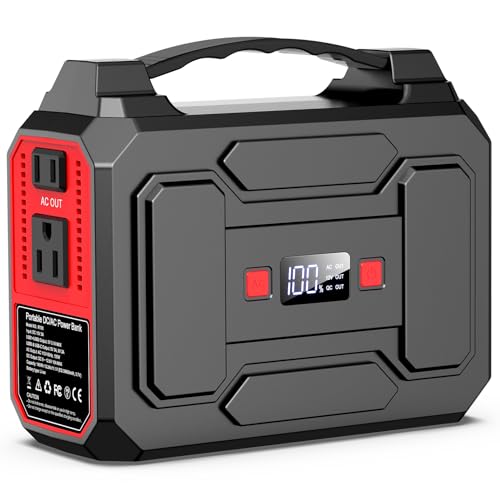
1. Apowking 146Wh Portable Power Station Bank 200W Peak(100W Rated) Solar Powered Power Bank with AC Outlet 110V, 39600mAh, USB QC3.0 Fast Charging, LED Flashlights for Home Camping Emergency
The Apowking 146Wh unit is a compact AC-capable power station that solves the outage problem by offering two 110V AC outlets (100W continuous), multiple USB ports including QC3.0, and a solar recharge option. Its light weight and LED flashlight modes make it easy to stash in an apartment kit so you can keep comms, lighting and small fans running when the grid goes down.
Key Specs
- Capacity: 146Wh / 39600mAh
- AC output: 110V, 100W continuous (200W peak)
- Outputs: 2x AC, multiple USB-A / USB-C, DC 12V
- Solar input compatible: 13–23V (solar panel not included)
- Weight: ~3.3 lb; built-in LED flashlight with SOS/strobe
Pros
- Solar recharge option for multi-day outages
- Lightweight and easy to store in small spaces
- Multiple outputs cover phones, tablets and laptops
Cons
- Some users report inconsistent charge retention over long term
- 100W AC limit won’t run larger appliances or high-startup loads
Best For: Apartment emergency kit, phones & laptops
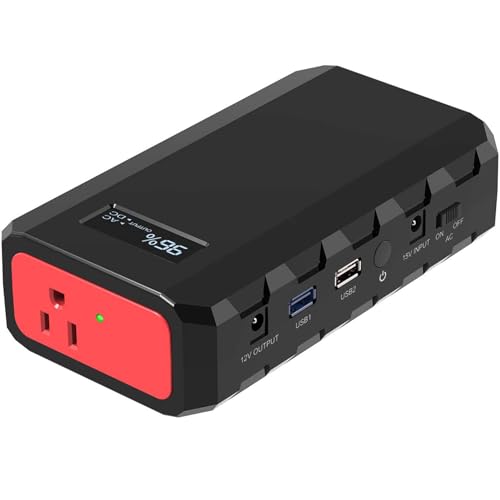
Check Latest Price on Amazon2. SinKeu Portable Power Bank with AC Outlet, 88.8Wh Portable Laptop Charger, Portable Power Station Outdoor Generators Portable for Home Backup Outdoor Emergency
The SinKeu 88.8Wh charger addresses the core outage need by delivering a small, affordable AC-capable pack with quick recharge and an OLED display so you always know remaining runtime. It’s best when you need dependable phone, tablet and occasionally laptop power without a large unit — and it includes car and wall recharge accessories for flexible top-ups during an outage.
Key Specs
- Capacity: 88.8Wh / 24000mAh
- AC output: single 110V AC outlet
- Fast recharge: DC15V/2A (30W) input — recharges in under 4 hours
- Outputs: QC3.0 USB-A, 5V/3A USB, DC 9–12.6V/10A
- OLED display and built-in BMS safety protections
Pros
- Very affordable option for basic outage needs
- Quick recharge and car-charging accessories included
- Clear OLED display for easy battery monitoring
Cons
- Lower capacity means shorter runtimes for multiple devices
- Some reports of inconsistent durability and mixed long-term reliability
Best For: Budget-minded users, phone & light backup
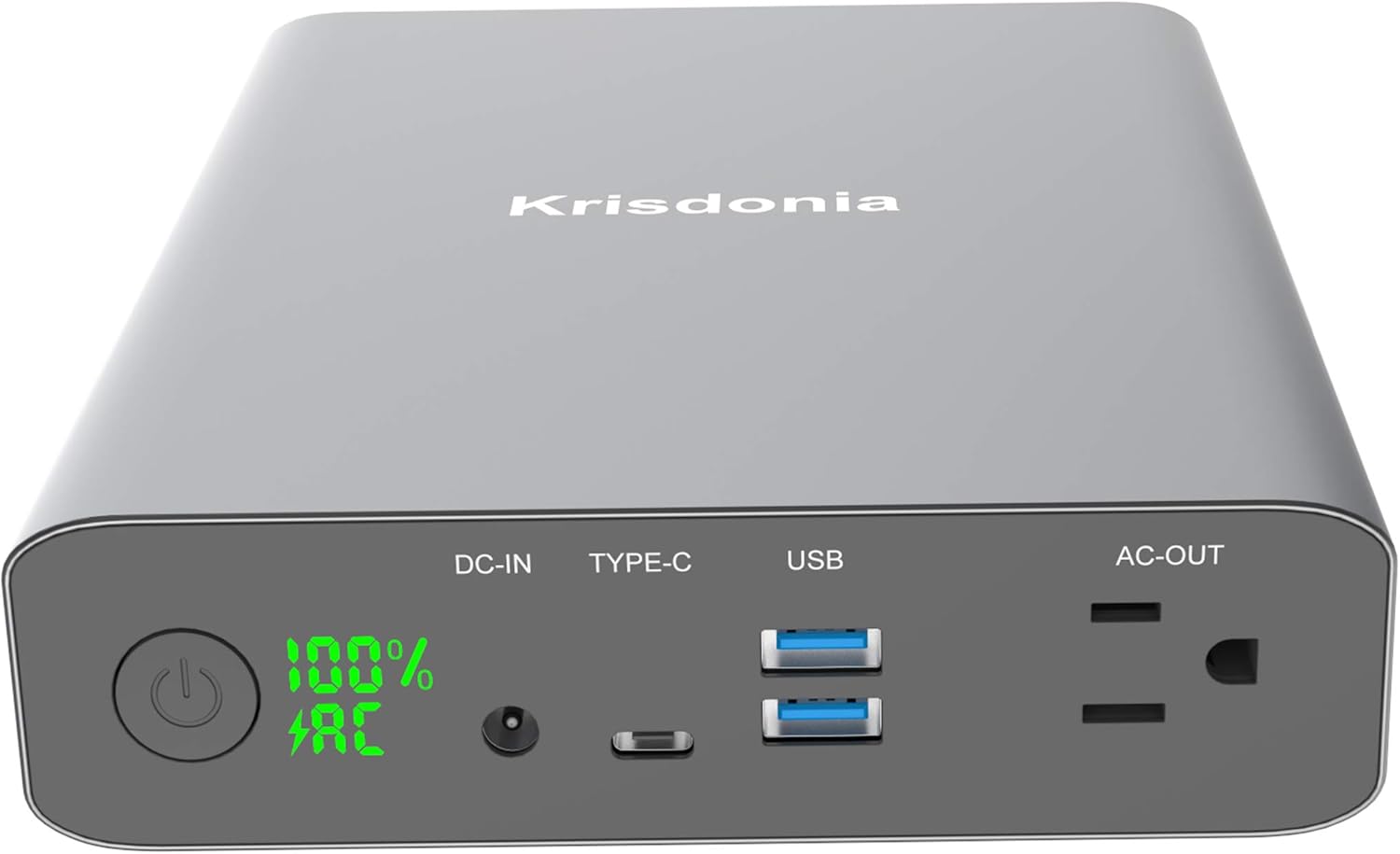
Check Latest Price on Amazon3. Krisdonia Portable Power Station 130W AC Power Bank 60000mAh Lithium Polymer Battery Backup Power Supply for Outdoors Camping Travel Hunting Emergency
Krisdonia’s 60000mAh (222Wh) station solves outage problems by delivering high capacity and an AC outlet rated up to 130W, so you can run a laptop, lights and a router for longer. The unit supports pass-through charging (charge the station while powering devices), which is useful in apartments where you may have intermittent access to wall power or a car charger.
Key Specs
- Capacity: 60000mAh / 222Wh
- AC output: 110V, 130W max
- Outputs: 1x AC, 2x QC3.0 USB-A, 1x 20W USB-C
- Pass-through charging supported; DC IN 19V/2A recharge (~8 hours)
- Weight: ~3.9 lb; lithium polymer cells, multi-protection BMS
Pros
- Higher capacity gives longer runtimes for laptops and multiple phones
- Pass-through charging for flexible recharge while in use
- Well-suited to heavier charging needs in an apartment kit
Cons
- Heavier and less compact than lower-capacity options
- 130W AC limit still restricts larger appliance use
Best For: Longer outages, multiple devices, heavier charging
Check Latest Price on AmazonWhich One Should You Choose?
If budget is tight → choose the SinKeu 88.8Wh unit for affordable, compact phone-and-light backup. If you want the best balance of portability, AC outlets and a solar option → pick the Apowking 146Wh (Best Overall). If you need the longest runtime and can accept a slightly larger unit → go with the Krisdonia 222Wh Premium option for extended outages and multiple-device charging.
Best for Specific Scenarios
- Phone, router and lights during a single-day outage: SinKeu 88.8Wh because it’s compact, affordable and fast to recharge for brief outages.
- Work-from-home interruptions (laptop + phone + router): Apowking 146Wh because it offers AC outlets, multiple USB ports and solar compatibility to stretch runtime across intermittent power.
- Multi-day outages or charging multiple people’s devices: Krisdonia 222Wh because higher capacity and pass-through support let you run several devices longer without immediate wall recharges.
Frequently Asked Questions
How long will a portable power station keep my phone charged during an outage?
A typical smartphone uses about 10–15Wh per full charge. So an 88–150Wh unit will deliver several full phone charges (roughly 4–12 charges depending on phone size and inefficiencies). Expect fewer charges if you’re fast-charging or running additional devices at the same time.
Can I use a solar panel with these power banks in an apartment?
Solar is feasible but limited in apartments: the units that support solar (like the Apowking) require a compatible panel and sufficient sun exposure. If you have a balcony with good sun, a compact foldable panel can top up the station over the day. For multi-day independence you’ll need panel wattage high enough to replenish the pack’s Wh each day.
Will these devices run my mini-fridge or other household appliances?
Most compact stations reviewed have AC limits of 100–130W continuous, which means they can power small fans, lights and many laptops but not larger appliances or fridges that have high startup currents. Always check the appliance’s starting and running watt requirements before attempting to power it.
How We Selected These Products
Our recommendations are based on data-driven analysis: we evaluated 155229+ products across 23916+ brands using a composite scoring system that weighs rating (40%), review volume (30%), price value (20%), and demand signals (10%). Every product is ranked by data, not opinions.
Last updated: October 29, 2026
As an Amazon Associate we earn from qualifying purchases at no extra cost to you. Full disclosure.
GearLark Score is our editorial ranking based on a composite analysis of product quality, value, and verified customer sentiment. Click through to Amazon for current pricing, availability, and live customer reviews.