As an Amazon Associate we earn from qualifying purchases. Learn more.
How to Build a Portable Charging Kit for Day Hikes (2026 Guide)
If you want a lightweight, compact charging kit that keeps your phone, GPS and camera topped up on day hikes — with a solar fallback for longer outings or emergencies — this guide walks you through a complete 2026 setup. You’ll learn which multifunction radios and solar panels work best together, how to balance capacity, weight and durability, and what extras matter (USB-C, USB-A, hand crank, NOAA alerts, IP ratings). Products were selected for practical outdoor fit: compactness, multiple charging modes, and real-world feedback about battery life and durability. The kit focuses on portability and layered redundancy so you can hike confidently without carrying bulky power banks.
Quick Answer
For a compact day-hike charging kit with reliable backup, the QAUYYW Hand Crank Emergency Radio (B0CMCZ8Z94) is the best single-device pick: it combines hand-crank and solar charging with NOAA alerts and lights. Pair it with a BigBlue 21W foldable solar panel and the UYEIKMLOP 12,000mAh solar radio/power bank for higher-capacity backup.
Our Top Picks
Quick Comparison
Select 2-3 products to compare side-by-side
| Compare | Product | GearLark Score | Price Tier | Key Feature | Best For | Action |
|---|---|---|---|---|---|---|
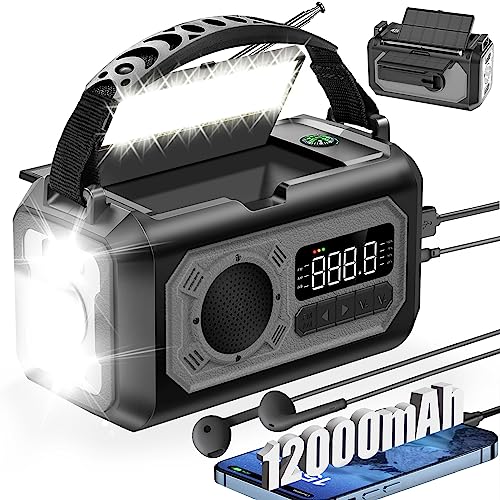 12,000mAh Solar Emergency Radio
|
Mid-Range | 12,000mAh battery with dual solar panels | Hikers who want higher-capacity backup | Check Price | ||
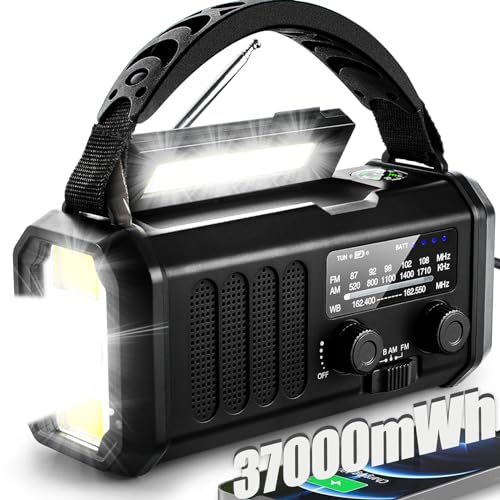 Hand Crank Emergency Radio
|
Budget | Hand-crank plus solar charging | Lightweight, reliable emergency backup | Check Price | ||
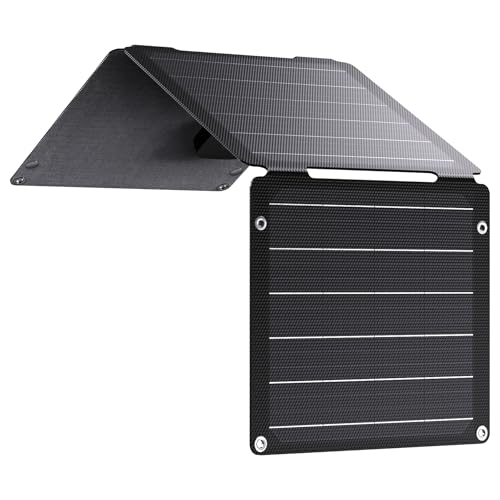 BigBlue 21W SolarPowa
|
Budget | 21W foldable monocrystalline panels | Solar-first charging on longer hikes | Check Price |
1. 12000mAh Emergency Weather Radio, Hand Crank Solar Radio Portable AM/FM/NOAA Radio with 2 Solar Panels 3 Charging Methods SOS Alarm 3 Mode Flashlight Phone Charger Compass Reading Lamp
This multifunction emergency radio doubles as a 12,000mAh power bank, with dual solar panels, hand crank charging, NOAA/AM/FM reception and multiple lighting modes. It’s a compact all-in-one that gives you significant battery reserve for phones and small cameras while also serving as a weather radio and SOS/light source.
Key Specs
- 12,000mAh internal battery capacity
- Dual solar panels + hand crank charging
- NOAA/AM/FM radio and telescopic antenna
- Flashlight, reading lamp, SOS alarm and compass
Pros
- High-capacity internal battery for multiple phone charges
- Multiple charging modes (solar, crank, USB) for redundancy
- Useful set of emergency features: NOAA alerts, lights, SOS
Cons
- Mixed reports on long-term battery hold and durability
- Larger and heavier than ultra-compact single-purpose chargers
Best For: Hikers who want higher-capacity backup
Check Latest Price on Amazon2. Hand Crank Emergency Radio,37000mWh Solar Powered Portable NOAA AM FM Weather Radio with 3Mode Flashlight and Reading Light,Cell Phone Charger,Home and Emergency Distress Signal (Black)
A compact, budget-friendly emergency radio that emphasizes reliable redundancy: hand crank, solar panel and USB-C charging. It includes a bright flashlight and reading lamp, NOAA alerts, a compass and is designed to be pocketable for day hikes and emergency carry.
Key Specs
- Built-in ~10,000mAh polymer battery (37000mWh stated capacity)
- Three charging modes: USB-C, hand crank, solar
- Integrated flashlight (20 LED) and 48-LED reading lamp
- IPX6 water-resistant design and retractable antenna
Pros
- Very compact and portable for day hikes
- Multiple charging methods ensure phone/GPS power in outages
- Bright integrated lights and straightforward controls
Cons
- Some users report inconsistent battery retention after repeated use
- Manual tuning required for NOAA alerts and radio reception
Best For: Lightweight, reliable emergency backup
Check Latest Price on Amazon3. 21W Solar Panel Charger BigBlue SolarPowa 20 Portable Solar Charger with USB-A/USB-C Ports, IP68 Waterproof, High-Efficiency Lightweight Foldable Solar Panels for Phones, Tablets, Camping, Backpacking
A lightweight, foldable 21W solar charger designed to attach to a pack or tent and top up phones, GPS units and power banks when you have sunlight. It offers USB-A and USB-C outputs with intelligent protection, a durable PVDF surface and an IP68 rating for the panel surface (junction box not waterproof).
Key Specs
- 21W output with monocrystalline solar cells
- Dual ports: USB-A and USB-C (combined 5V/4.2A max)
- PVDF surface, foldable, includes carabiners and USB-C cable
- Weighs ~1.32 lbs; panel does not store energy (no internal battery)
Pros
- High power for a compact foldable panel — can charge multiple devices
- Lightweight and easy to attach to a pack or set on a rock
- Durable PVDF surface and good weather resistance for outdoor use
Cons
- Output depends strongly on sun angle and conditions
- USB junction box is not fully waterproof; needs care in rain
Best For: Solar-first charging on longer hikes
Check Latest Price on AmazonWhich One Should You Choose?
If you want a compact, reliable emergency-first device with hand-crank redundancy → choose the QAUYYW Hand Crank Emergency Radio (B0CMCZ8Z94). If you prioritize solar topping ability and want to keep devices charged during sunny outings → add or start with the BigBlue 21W SolarPowa (B0DT15YWBB). If you want higher internal battery capacity and a broader set of integrated emergency features in a single mid-range unit → the UYEIKMLOP 12,000mAh Solar Emergency Radio (B0CCJTSS15) is the best balanced pick.
Best for Specific Scenarios
- Short solo day hikes: QAUYYW Hand Crank Emergency Radio because it’s pocketable, offers hand-crank backup and bright lights without adding much weight.
- Sunny multi-stop hikes or bikepacking day legs: BigBlue 21W SolarPowa because the 21W output can meaningfully top up phones and small power banks while you pause.
- Emergency-focused kit with extra capacity: UYEIKMLOP 12,000mAh Solar Emergency Radio because the larger internal battery gives more phone/GPS charges and includes multiple useful emergency features.
Frequently Asked Questions
Can a foldable solar panel fully charge my phone on a day hike?
A 21W foldable panel can often provide a significant top-up during several hours of good sun, enough for partial or full charges on many phones depending on sunlight and angle. It won’t store energy, so pair it with a battery (or charge devices directly while the panel is in sunlight). Cloudy or shady conditions reduce output substantially.
How useful is a hand-crank charger for real emergencies?
Hand-crank charging is valuable as a last-resort power source: a few minutes of cranking can generate enough juice for a short call or to refresh a GPS. It’s slow and best used to get critical communications or waypoint information rather than fully recharge multiple devices.
Should I pick a radio with NOAA alerts for day hikes?
Yes if you hike in areas where weather changes rapidly. NOAA-capable radios provide battery-powered weather alerts and reduce surprise storms. They also typically include lights and an SOS feature, which adds safety value even on day hikes.
How We Selected These Products
Our recommendations are based on data-driven analysis: we evaluated 155229+ products across 23916+ brands using a composite scoring system that weighs rating (40%), review volume (30%), price value (20%), and demand signals (10%). Every product is ranked by data, not opinions.
Last updated: May 27, 2026
As an Amazon Associate we earn from qualifying purchases at no extra cost to you. Full disclosure.
GearLark Score is our editorial ranking based on a composite analysis of product quality, value, and verified customer sentiment. Click through to Amazon for current pricing, availability, and live customer reviews.