As an Amazon Associate we earn from qualifying purchases. Learn more.
Best Portable Routers vs Hotspots for International Students (2026)
Studying abroad brings repeated connectivity questions: is a portable router or a mobile hotspot a better fit? This guide compares three 2026 travel-focused devices — the TP‑Link BE3600 (Wi‑Fi 7 travel router), TP‑Link TL‑WR3002X (Wi‑Fi 6 budget travel router) and the GL.iNet GL‑E750V2 (MUDI) 4G LTE hotspot/router — focusing on data plans, ease of use, and travel compatibility for international students. Products were selected for portability, security features (VPN support), SIM/cellular options and real-world customer feedback about build quality, battery life and reliability.
Quick Answer
For most international students the TP-Link BE3600 is the best overall choice — it delivers Wi‑Fi 7 speeds, multi-gig wired ports and robust VPN support for dorms and shared apartments. If you need the cheapest reliable option pick the TP-Link TL-WR3002X; if you need built-in cellular and a battery for off-grid travel choose the GL.iNet GL-E750V2.
Our Top Picks
Quick Comparison
Select 2-3 products to compare side-by-side
| Compare | Product | GearLark Score | Price Tier | Key Feature | Best For | Action |
|---|---|---|---|---|---|---|
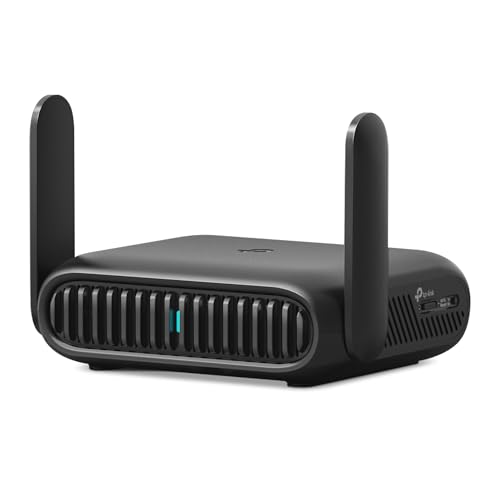 TP-Link BE3600
|
Mid-Range | Wi‑Fi 7 speeds + 2.5Gbps port | Students needing high throughput | Check Price | ||
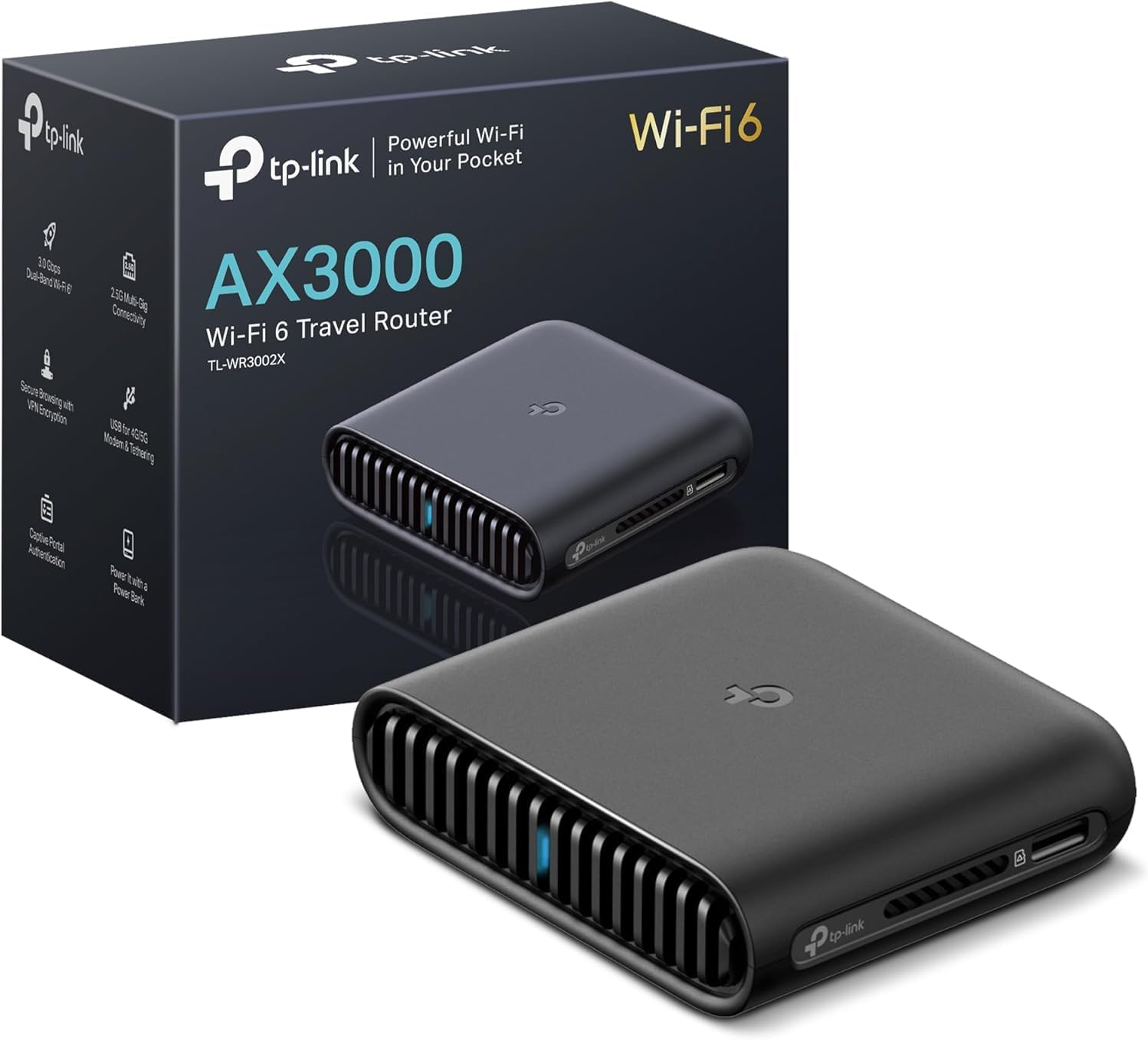 TP-Link TL-WR3002X
|
Budget | Compact Wi‑Fi 6 with VPN | Budget-conscious students | Check Price | ||
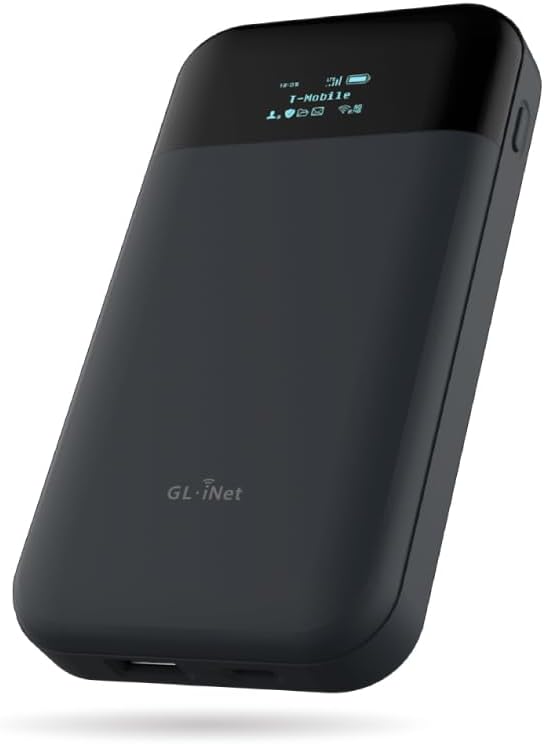 GL.iNet GL-E750V2
|
Premium | Built-in 4G LTE + 7000mAh battery | Backpackers & off-grid travel | Check Price |
1. TP-Link BE3600 Wi-Fi 7 Portable Travel Router TL-WR3602BE | Dual-Band, 2.5 Gig Port, USB 3.0 | Multi-Modes in One | OpenVPN, WireGuard | Public WiFi Sharing for Hotel/Cruise/RV/Plane | No 6 GHz
The BE3600 brings Wi‑Fi 7 performance in a travel-sized router with multi-gig wired ports and strong VPN support. It excels when you need to serve many devices in a dorm or shared apartment and want stable wired/wireless performance for remote classes, streaming and file transfers.
Key Specs
- Wi‑Fi 7 dual-band: up to 2882 Mbps (5 GHz) + 688 Mbps (2.4 GHz)
- 1×2.5 Gbps WAN and 1×1 Gbps LAN; USB 3.0 for storage or tethering
- Multiple modes: Router, Hotspot, AP, RE, Client
- VPN support: OpenVPN and WireGuard; no OpenWrt support
Pros
- Higher throughput and device capacity than TL-WR3002X
- Better wired multi‑gig connectivity than GL-E750V2
- Robust VPN and security features compared with budget options
Cons
- No 6 GHz band — less future proof than some Wi‑7 expectations
- No internal battery — less convenient than battery hotspots like GL-E750V2
Best For: Students needing high throughput
Check Latest Price on Amazon2. TP-Link Dual-Band Wi-Fi 6 AX3000 Travel Router TL-WR3002X | Multi-Gig Portable | OpenVPN, WireGuard | Easy Public WiFi Sharing | Hotel/Cruise/Travel Approved | Phone WiFi Tether | USB 3.0 | Multi-Mode
The TL‑WR3002X packs Wi‑Fi 6 performance into a very compact, affordable travel router with VPN and multi‑mode support. It’s a strong budget pick for students who need reliable hotel or dorm Wi‑Fi sharing without premium hardware features.
Key Specs
- Wi‑Fi 6 (AX3000): up to 2402 Mbps (5 GHz) + 574 Mbps (2.4 GHz)
- 1×2.5 Gbps WAN/LAN and 1×1 Gbps LAN; USB 3.0
- Modes: Router, Hotspot, AP, RE; supports OpenVPN & WireGuard
- Advanced features: MU‑MIMO, OFDMA, beamforming, QoS
Pros
- Much more affordable than the BE3600 while keeping VPN support
- Smaller and lighter for pocketable travel compared with BE3600
- Good signal and antenna coverage for price compared with GL-E750V2
Cons
- Less future‑proof than the BE3600’s Wi‑Fi 7 throughput
- Some reported durability and early-failure feedback compared with premium models
Best For: Budget-conscious students
Check Latest Price on Amazon3. GL.iNet GL-E750V2 (MUDI) 4G LTE Portable Wi-Fi Hotspot for Travel | Mobile Hotspot Device, OpenWrt, OpenVPN, WireGuard, 7000mAh, Global Version
MUDI is a true mobile hotspot with a SIM slot, eSIM support options and a large 7000mAh battery for hours of off-grid connectivity. It’s ideal when you rely on local cellular data plans and need a standalone hotspot with OpenWrt flexibility.
Key Specs
- 4G LTE cellular modem (SIM slot) with global adapters and optional eSIM
- Combined Wi‑Fi: 300 Mbps (2.4 GHz) + 433 Mbps (5 GHz)
- 7000mAh battery offering up to ~8 hours of use; OpenWrt, OpenVPN and WireGuard
- Expandable storage (microSD), USB 2.0, Ethernet port
Pros
- Built‑in cellular and battery — better off‑grid travel support than both TP‑Link models
- More flexible firmware (OpenWrt) for custom setups than TP‑Link routers
- Includes global power adapters and microSD support for sharing files
Cons
- Lower Wi‑Fi throughput and device capacity than both TP‑Link routers
- Some users report heat and inconsistent cellular connectivity in certain regions
Best For: Backpackers & off-grid travel
Check Latest Price on AmazonWhich One Should You Choose?
If budget is tight → TP‑Link TL‑WR3002X. It gives Wi‑Fi 6 speeds, VPN support and easy setup at the lowest price tier and is ideal for students on a budget who mainly use hotel or campus wired connections.
If you need portable cellular & battery for travel and local data plans → GL.iNet GL‑E750V2 (MUDI). Its SIM slot, eSIM support and 7000mAh battery make it the easiest choice for backpacking, short‑term study trips or frequent country switches.
If premium performance for a shared apartment or dorm is your priority → TP‑Link BE3600. Choose this for the best local throughput, multi‑device capacity and multi‑gig wired ports to support online classes, streaming and file transfers simultaneously.
Best for Specific Scenarios
- Campus dorm with many devices: TP‑Link BE3600 because it handles higher device counts and offers multi‑gig wired ports for fast wired access.
- Budget-conscious student on short stays: TP‑Link TL‑WR3002X because it delivers reliable Wi‑Fi 6 features and VPN support at a lower cost.
- Backpacking between countries or remote research trips: GL.iNet GL‑E750V2 because it has a SIM slot, large battery and global adapter set for buying local data plans and staying connected off‑grid.
Frequently Asked Questions
Should I choose a portable router or a mobile hotspot for studying abroad?
If you primarily use campus or wired hotel internet and need to share that connection with many devices, a portable router (TP‑Link models) is usually better. If you need independent cellular internet, battery power and the ability to buy local SIM/eSIM plans, pick a mobile hotspot like the GL.iNet GL‑E750V2.
Can these devices run a VPN for secure connections?
Yes — all three devices support VPNs. The TP‑Link models include OpenVPN and WireGuard support for client/server roles; the GL.iNet MUDI supports OpenVPN and WireGuard and offers OpenWrt for advanced VPN routing and custom DNS setups.
How do I save money on data plans while abroad?
Buy local prepaid SIM or eSIM profiles where available, choose data plans by estimated monthly use (video calls use the most), and use the router’s QoS or device prioritization to limit background syncing. For short trips, pay‑as‑you‑go eSIMs can be convenient; for longer stays, a local SIM with a monthly plan often offers better value.
How We Selected These Products
Our recommendations are based on data-driven analysis: we evaluated 155229+ products across 23916+ brands using a composite scoring system that weighs rating (40%), review volume (30%), price value (20%), and demand signals (10%). Every product is ranked by data, not opinions.
Last updated: June 18, 2026
As an Amazon Associate we earn from qualifying purchases at no extra cost to you. Full disclosure.
GearLark Score is our editorial ranking based on a composite analysis of product quality, value, and verified customer sentiment. Click through to Amazon for current pricing, availability, and live customer reviews.