As an Amazon Associate we earn from qualifying purchases. Learn more.
SD Card vs Portable SSD vs NVMe Enclosure for Drone 4K Footage (2026)
If you shoot drone 4K or 6K footage on location you juggle big files, limited time, and unpredictable conditions. This head-to-head comparison looks at SD cards (the three microSDs below) and explains how they stack up versus portable SSDs and NVMe enclosures for real-world drone workflows in 2026. You'll learn how capacity, speed, durability and transfer workflow affect what you should carry. Products were selected from commonly recommended options for drone and action-camera use and evaluated on speed specs, real-world customer feedback, durability features, and value.
Quick Answer
For most drone videographers shooting 4K/6K on location the Samsung PRO Plus microSD (ASIN B0C1PPWTWT) is the best all-around choice — it balances high sustained speeds, broad capacities and rugged protections. If you need the cheapest expandable option choose the Gigastone 32GB 5-pack (B0C13TD3Y8); for maximum onboard capacity in microSD format choose the Gigastone 512GB (B0CFVHXLWZ).
Our Top Picks
Quick Comparison
Select 2-3 products to compare side-by-side
| Compare | Product | GearLark Score | Price Tier | Key Feature | Best For | Action |
|---|---|---|---|---|---|---|
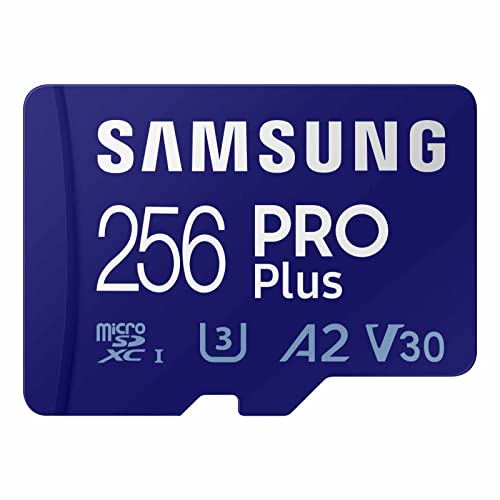 Samsung PRO Plus 256GB
|
Budget | Up to 180/130 MB/s read/write | Balanced 4K drone workflows | Check Price | ||
![[5-Yrs Free Data Recovery] GIGASTONE 32GB Micro SD Card 5-Pack, 4K Camera Pro, Compatible with GoPro, Wyze, Security Camera, Drone, Dash Cam, R/W up to 95/35MB/s MicroSDHC Memory Card UHS-I U3 A2 V30](/assets/images/products/B0C13TD3Y8.jpg) Gigastone 32GB 5‑Pack
Gigastone 32GB 5‑Pack
|
Mid-Range | 5‑pack with 5‑year data recovery | Budget multi‑card setups & backups | Check Price | ||
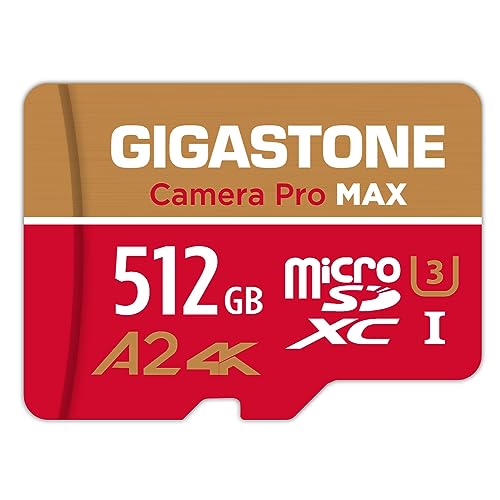 Gigastone 512GB
|
Premium | Up to 160/100 MB/s | Max onboard microSD capacity | Check Price |
1. Samsung PRO Plus microSD Memory Card + Adapter, 256GB microSDXC, Up to 180 MB/s, Full HD & 4K UHD, UHS I, C10, U3, V30, A2, for Android Smartphones, Tablets, GoPRO, and DJI Drone (MB MD256SA/AM)
Samsung's PRO Plus is the most balanced microSD option here — it offers the fastest listed UHS‑I speeds among these cards, broad capacity options, and extensive environmental protections that matter on location. It’s a great default for drone pilots who need reliable capture and fast transfers to laptop/card reader.
Key Specs
- Read/Write up to 180/130 MB/s (manufacturer)
- UHS‑I, Class 10, U3, V30, A2
- Capacities: 128GB / 256GB / 512GB
- Environmental protections: waterproof, temperature, X‑ray, magnetic, drop
Pros
- Faster sustained speeds than the Gigastone 32GB pack
- Better environmental protection than many budget cards
- Wide capacity options up to 512GB for longer shoots
Cons
- Still limited by UHS‑I ceiling — cannot match NVMe/SSD speeds
- Some users report occasional reliability issues in edge cases
Best For: Balanced 4K drone workflows
Check Latest Price on Amazon2. [5-Yrs Free Data Recovery] GIGASTONE 32GB Micro SD Card 5-Pack, 4K Camera Pro, Compatible with GoPro, Wyze, Security Camera, Drone, Dash Cam, R/W up to 95/35MB/s MicroSDHC Memory Card UHS-I U3 A2 V30
The Gigastone 32GB five‑pack is a strong budget choice for pilots who want multiple cards for rotation or quick swaps. Read speeds are modest compared with premium microSDs, but the multi‑card value and included data recovery support make it attractive for entry-level or backup workflows.
Key Specs
- Read/Write up to 95/35 MB/s
- UHS‑I, U3, A2, V30
- 32GB per card, sold as 5‑pack
- Waterproof, shockproof, temperature and X‑ray proof
Pros
- Better value for multiple-card workflows than single premium cards
- Convenient for short sorties and quick swaps
- Includes 5 years of free data recovery support
Cons
- Lower write speed not ideal for high-bitrate 4K/6K long takes
- Small 32GB capacity fills quickly on longer missions
Best For: Budget multi‑card setups & backups
Check Latest Price on Amazon3. 5-Years Data Recovery GIGASTONE 512GB Micro SD Card, 4K Camera Pro MAX, Compatible with Gopro, Dash Cam, DJI, Drone, Security Camera, Speed Up to 160MB/s, UHS-I A2 4K U3 C10, with Adapter
Gigastone's 512GB card gives the largest microSD capacity in this comparison with strong read/write figures for UHS‑I media. It's a practical choice if you prefer fewer card swaps and want large on‑drone storage without carrying external SSDs.
Key Specs
- Read/Write up to 160/100 MB/s
- UHS‑I, U3, V30, A2
- 512GB capacity
- 5‑year warranty with free data recovery
Pros
- Higher capacity reduces need for on-mission card swaps
- Faster than budget microSDs for quicker offload
- Free data recovery support for covered period
Cons
- UHS‑I speed cap still below NVMe/SSD performance
- Some mixed feedback on durability in harsh conditions
Best For: Max onboard microSD capacity
Check Latest Price on AmazonWhich One Should You Choose?
If you want the simplest, most reliable microSD for everyday 4K drone work → Samsung PRO Plus (B0C1PPWTWT). It balances speed, durability and capacity and is the best all‑around microSD option here. If your budget is tight or you need multiple hot‑swap cards for many short sorties → GIGASTONE 32GB 5‑Pack (B0C13TD3Y8) offers the best value and easy redundancy. If you prefer fewer card swaps and need maximum on‑drone capacity in microSD format → GIGASTONE 512GB (B0CFVHXLWZ) reduces swap frequency and shortens mission interruptions. If you do frequent on‑site editing or want the fastest transfers, supplement any card choice with a portable NVMe SSD or an NVMe enclosure paired with an M.2 drive (for Thunderbolt/USB4 hosts) — that’s the workflow upgrade that improves turnaround time the most.
Best for Specific Scenarios
- Short hobby flights / travel: Gigastone 32GB 5‑Pack because multiple cheap cards let you rotate and avoid on-site transfers.
- Commercial or long mapping missions: Gigastone 512GB because large capacity minimizes mid‑mission swaps and keeps continuity.
- Pro shoots or quick turnaround editing: Samsung PRO Plus plus an NVMe enclosure — the card handles capture reliably, NVMe gives the transfer/edit speed you need on location.
Frequently Asked Questions
Can microSD cards keep up with 6K drone recording?
Possibly, but it depends on your drone's bitrate. Many 6K workflows push sustained write needs beyond typical UHS‑I microSD ceilings. Check your drone’s required sustained write rate — for sustained high-bitrate 6K you’ll often need higher-performance media or onboard SSD options.
Should I edit directly from a microSD card or copy to an SSD first?
Copy to an SSD first. Editing from the card is slower and increases wear risk. A fast portable SSD or NVMe drive in an enclosure gives much quicker transfers and smoother editing, especially for multi-cam or high-bitrate files.
How many spare cards should I carry on a shoot?
Carry enough to cover mission time plus a margin — for example, two cards per planned battery cycle is common. If you can offload to an SSD between rotations you can carry fewer cards. Prioritize redundancy and label cards to avoid mix-ups.
How We Selected These Products
Our recommendations are based on data-driven analysis: we evaluated 155229+ products across 23916+ brands using a composite scoring system that weighs rating (40%), review volume (30%), price value (20%), and demand signals (10%). Every product is ranked by data, not opinions.
Last updated: July 19, 2026
As an Amazon Associate we earn from qualifying purchases at no extra cost to you. Full disclosure.
GearLark Score is our editorial ranking based on a composite analysis of product quality, value, and verified customer sentiment. Click through to Amazon for current pricing, availability, and live customer reviews.